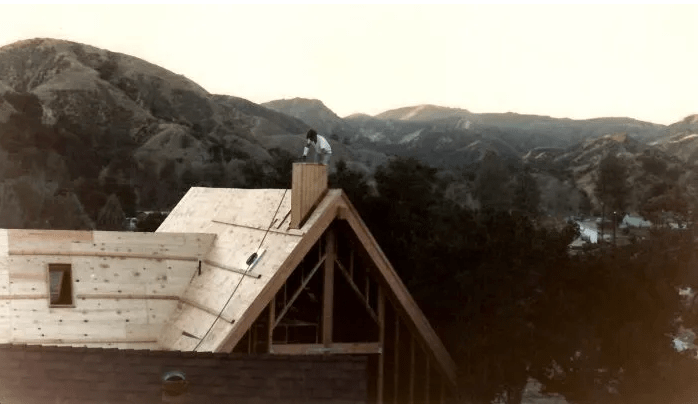
Most people don’t realize how common self-building homes still are around the world. In many countries, families build their own houses because it’s the most practical path to ownership. In Mexico, about 70 percent of homes are built this way. Across Europe, as much as 40 percent of new homes come directly from owners who commission or construct them themselves.
The United States once had a similar culture of self-building homes. Earlier generations ordered catalog kit houses, had materials shipped by rail, and finished much of the work themselves. After World War II, VA and FHA programs made it possible for working families to finance simple starter homes they could help build or complete.
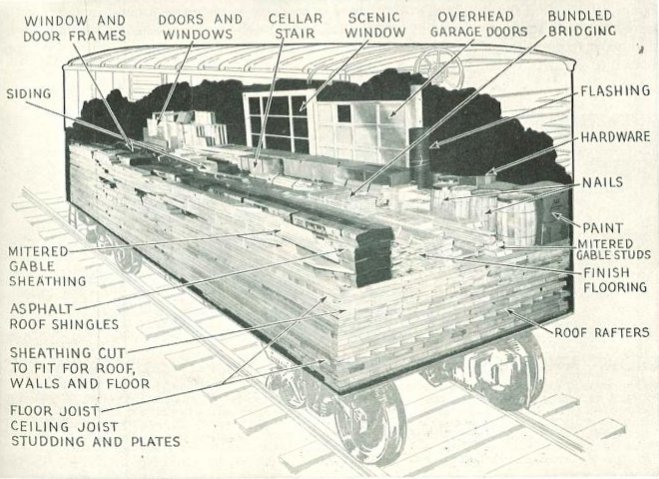
Over 100,000 kit homes were built in the United States between 1908 and 1940. Many were erected by owner-builders using pre-cut materials delivered by rail.
Over time, that pathway narrowed. Building codes became more technical, lenders shifted toward contractor-only construction, and the idea of ordinary people building their own homes faded from mainstream policy. But the need for self-building never disappeared.
Why Self-Building Reappears When Housing Costs Rise
Whenever housing prices spike, people start looking for ways to take construction back into their own hands. Immigrant communities especially carry strong self-building traditions from their home countries. They buy land, start small, and expand or upgrade their homes as money becomes available.
These neighborhoods often follow a predictable pattern: modest beginnings, gradual investment, and eventual consolidation into stable, working-class communities. It mirrors the way informal settlements in Mexico and other parts of Latin America mature over time.
Nonprofit groups also tap into this logic of self-building homes by involving residents directly in construction.
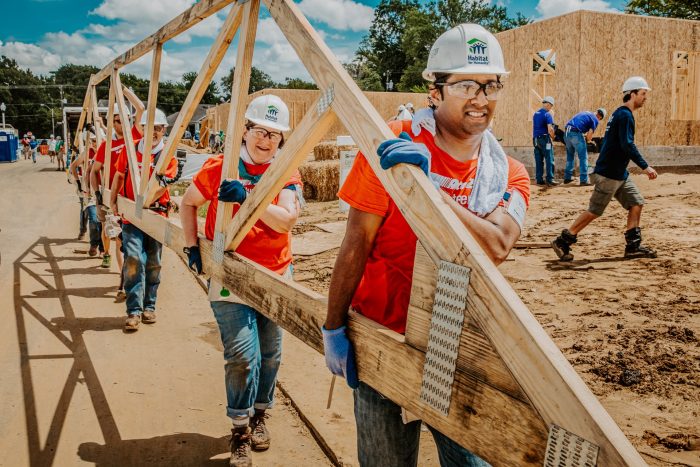
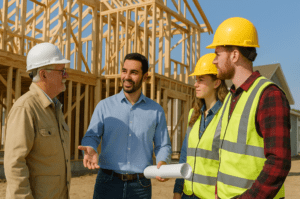
Habitat for Humanity, for example, partners with families who contribute labor alongside volunteers and professionals, turning sweat equity into long-term housing stability.
A More Supported Version Could Work in the U.S.
The United States doesn’t need to copy informal settlements, but it could adopt a more orderly, serviced, and lawful version of incremental self-building. Instead of forcing families to choose between a fully finished, high-cost product and nothing at all, policy could support a hybrid approach.
In this model, builders and planners would deliver the core structure, utilities, and life-safety elements. Residents would then finish interiors, yards, and accessory spaces themselves, at their own pace. This keeps initial costs within reach while recognizing the building skills already present in many communities.
Other countries already support owner-builders with straightforward technical resources.
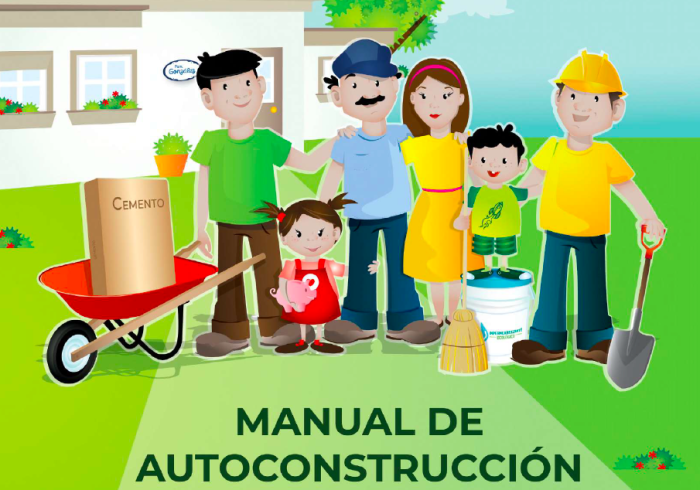
Mexico’s “Manual de Autoconstrucción,” for instance, provides simple, illustrated guidance for families who want to build safely and durably.
What Policy Support Could Look Like Today
If federal and state agencies revived even part of the support that once existed, self-building homes could again become a serious path to ownership. Several levers stand out:
- Flexible construction loans designed for phased or incremental building instead of single, all-or-nothing projects.
- Technical guidance and pattern books that show safe, code-compliant ways to complete interiors and additions.
- Simplified permitting pathways for small-scale owner work, paired with inspections focused on life-safety.
- Partnerships with nonprofits, community colleges, and trade groups to provide training and oversight.
Any serious effort would also recognize who already builds much of the housing in the U.S.
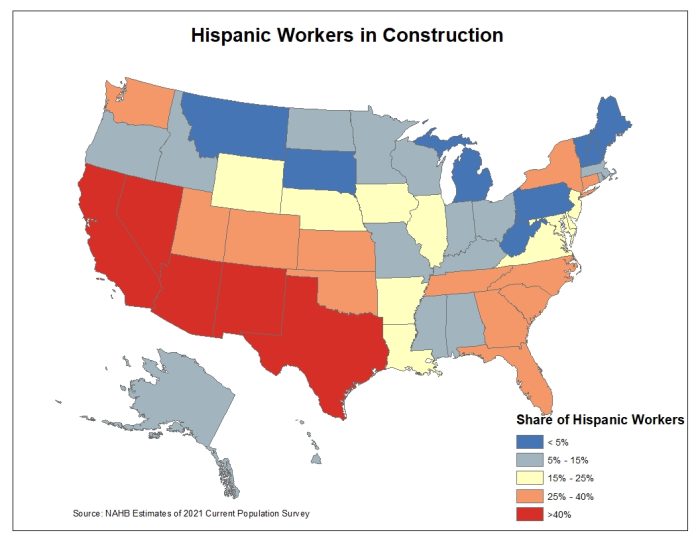
Hispanic workers make up a large share of the construction labor force in many states. Many come from cultures where self-building is normal, which means the skills for a renewed owner-builder movement are already here.
Designing Neighborhoods for Incremental Growth
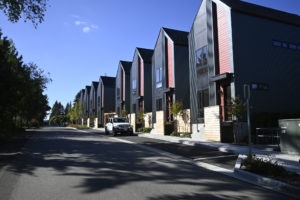
Self-building homes work best when the underlying neighborhood design anticipates change. That means allowing for additions, second units, and small business spaces without disrupting the overall pattern.
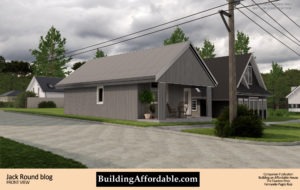
One example is a compact patio-home neighborhood where lots are sized and arranged for incremental growth.

In this concept, the patio homes include an optional accessory dwelling unit (ADU) and a garage that opens to a shared parking plaza, giving each unit space for multiple vehicles or work trucks.

The unit plan follows a Spanish patio home pattern: a main house in front, a central patio behind, a secondary utility patio, and a garage. A long side corridor, or zagúan, connects front and back, providing shade, ventilation, and drainage. Variations of this pattern appear in historic homes across Mexico and the southwestern United States, proving that compact, flexible designs can endure.
Why Self-Building Still Matters
Self-building homes matter because they offer something the current housing system rarely provides: a realistic, affordable, and empowering path to ownership. Families gain control over pace, cost, and long-term improvements instead of being locked into a fixed product at a fixed moment in time.
Neighborhoods built this way tend to grow through steady, human-scale investment rather than sudden boom-and-bust cycles. Earlier generations in the U.S. reached the first rung of ownership by building or finishing their own homes. With updated tools and better-aligned institutions, many families today could do the same.
Self-building homes are not a nostalgic fantasy. They are a practical response to high housing costs and a way to reconnect policy with how people actually live, work, and build.
Read: The Most Important Skill an Affordable Home Builder Needs